A guide to trekking from El Salto to La Huasteca
All you need to know to prepare for this epic trek in Nuevo León, Mexico
Published on March 20, 2026 | Updated on March 24, 2026
- Introduction
- An Overview Of The Trek
- When Is The Best Time To Do This Trek?
- What Should I Bring For The Trek?
- What Type Of Wildlife Can I Encounter Along The Trek?
- Conclusion
Introduction
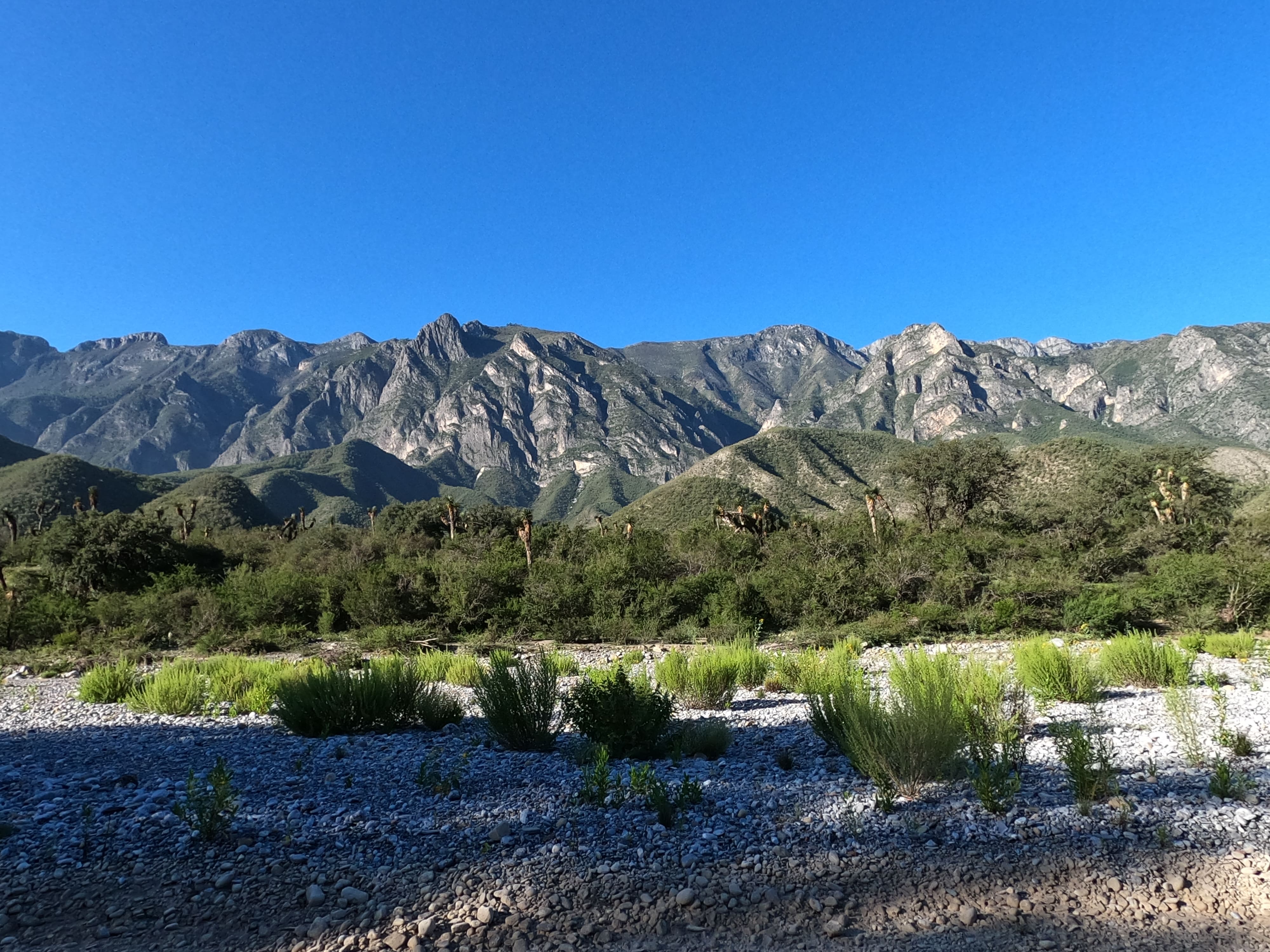
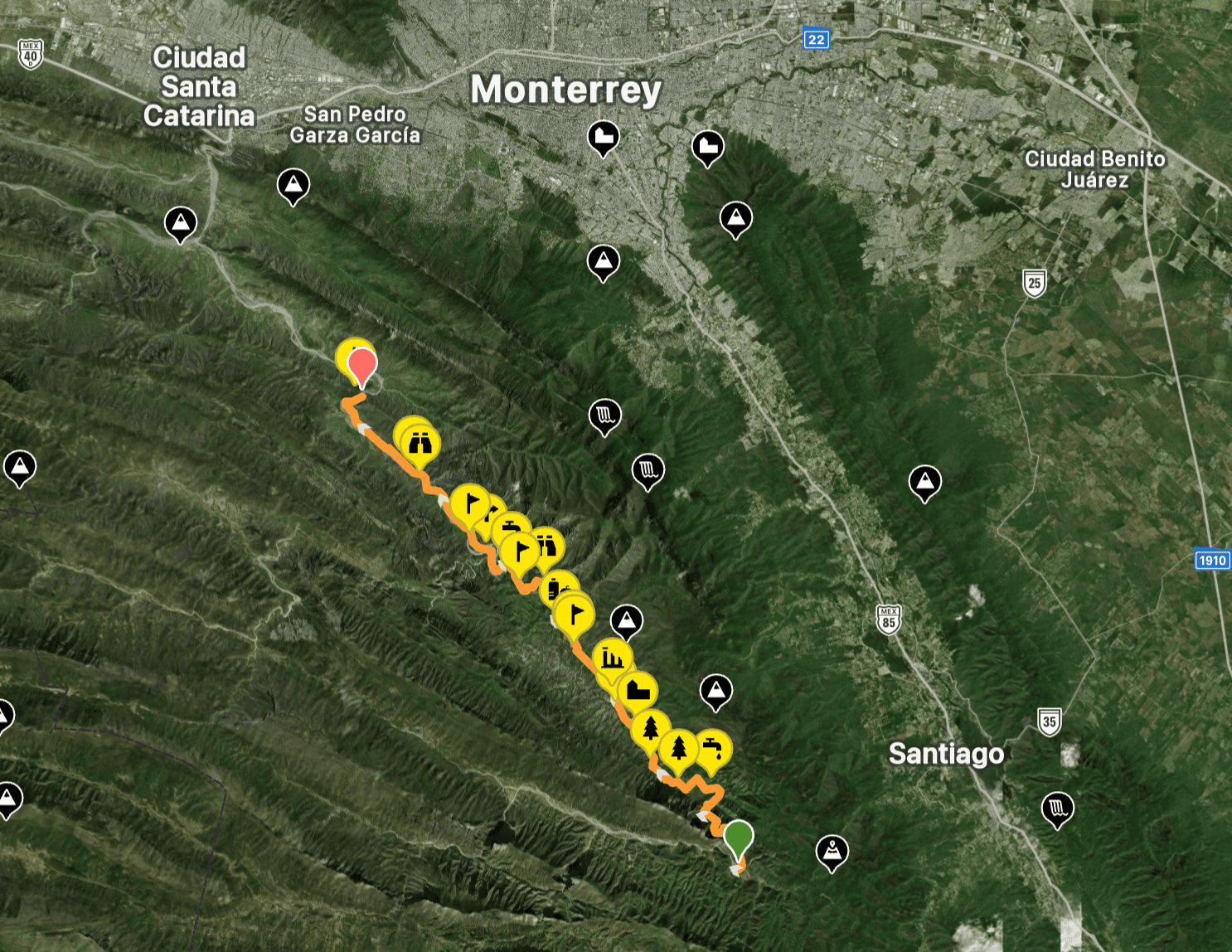
The Mexican state of Nuevo León offers many outstanding outdoor experiences due to its favorable geography, and this particular trek is proof of that. It starts in the high alpine sierras of Nuevo León, in a place called El Salto, next to a small town called Ciénega de González, and finishes in the arid canyons of La Huasteca Eco Park, a vast landscape of immense rocky walls that serves as a gateway to nature for the residents of the city of Monterrey and the surrounding areas.
These two locations, housed inside the majestic Sierra Madre Oriental, host some of our favorite climbing spots in Nuevo León. Linking both through this great trek was such a great experience for us, and we are sure it will be for you as well.
An Overview Of The Trek
| Distance | 36km |
| Time | Best done over 2 days |
| Starting point | Ciénega de González (El Salto), San Cristóbal Canyon |
| Ending point | La Huasteca Eco Park, Rompepicos |
| Recommended season | September through April |
| Difficulty | Hard |
Where Does The Trek Start?
The trek starts in Ciénaga de González, specifically at the entrance to the San Cristóbal Canyon.
Since this trek ends at a different location, driving there yourself is not the most convenient. Our family dropped us off at El Cercado, and we took a bus from there to Ciénega de González. You can also take a taxi or take a bus from the city center to get there (El Álamo from metro Santa Lucía takes about 1 hour and 15 minutes to get there. Review the schedule on Moovit beforehand).
The bus departs from the main plaza in El Cercado, in front of the pharmacy, and drives until Laguna de Sanchez, departing at 8.30 and 15.30 every day. You tell the driver where you are going, and they charge you directly in cash. We stopped at Hanuman café, from where we started our trek around 10.00. Hanuman offers great drinks and food, so you could have something to eat there before heading out.
What Can I Expect From The Trek?
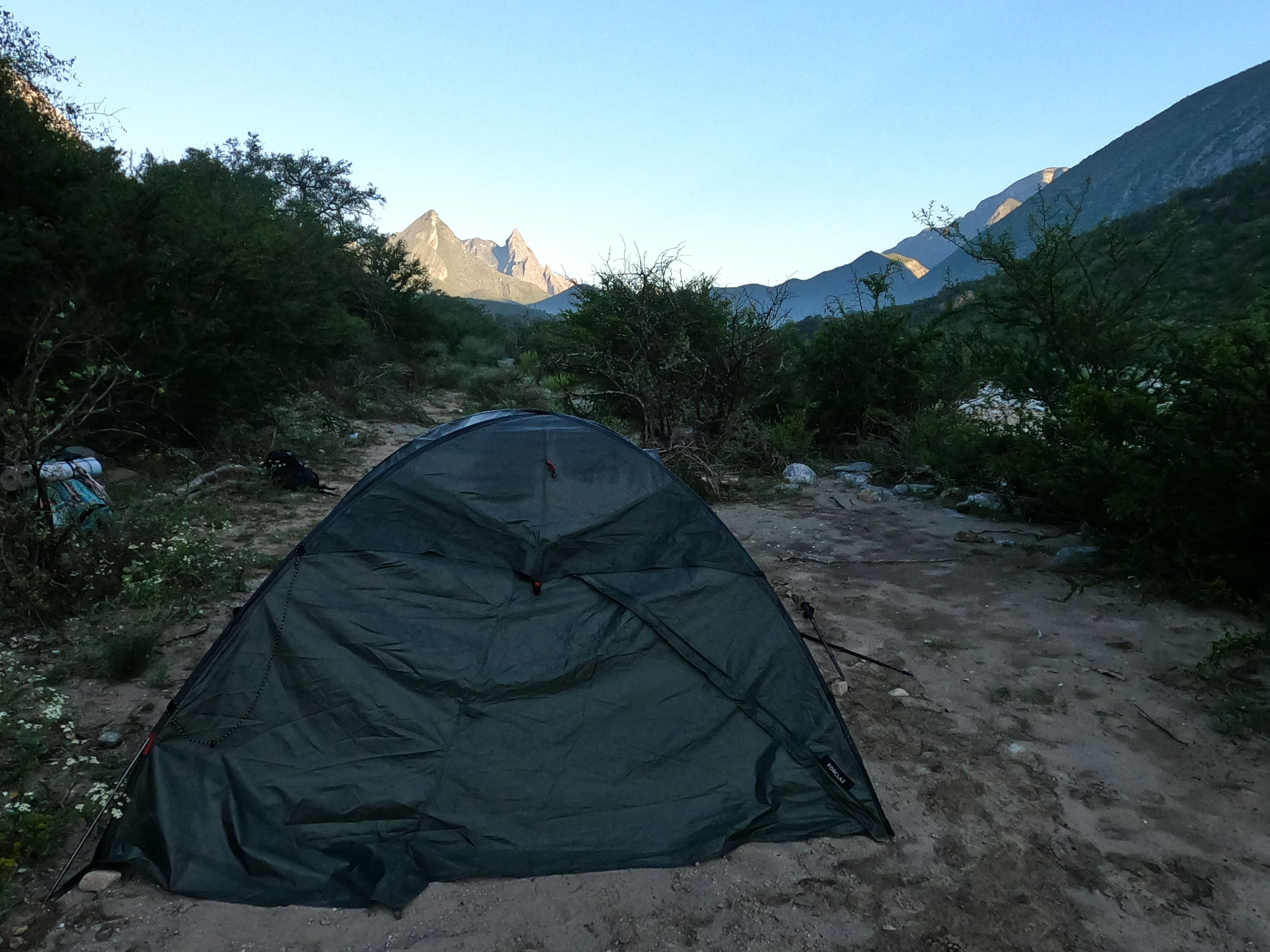
We decided to do the whole trek in 2 days. We camped around the halfway point. Some people do it in 1 day, which is feasible if you are fit and are used to this type of trek, and leave very early, before sunrise.
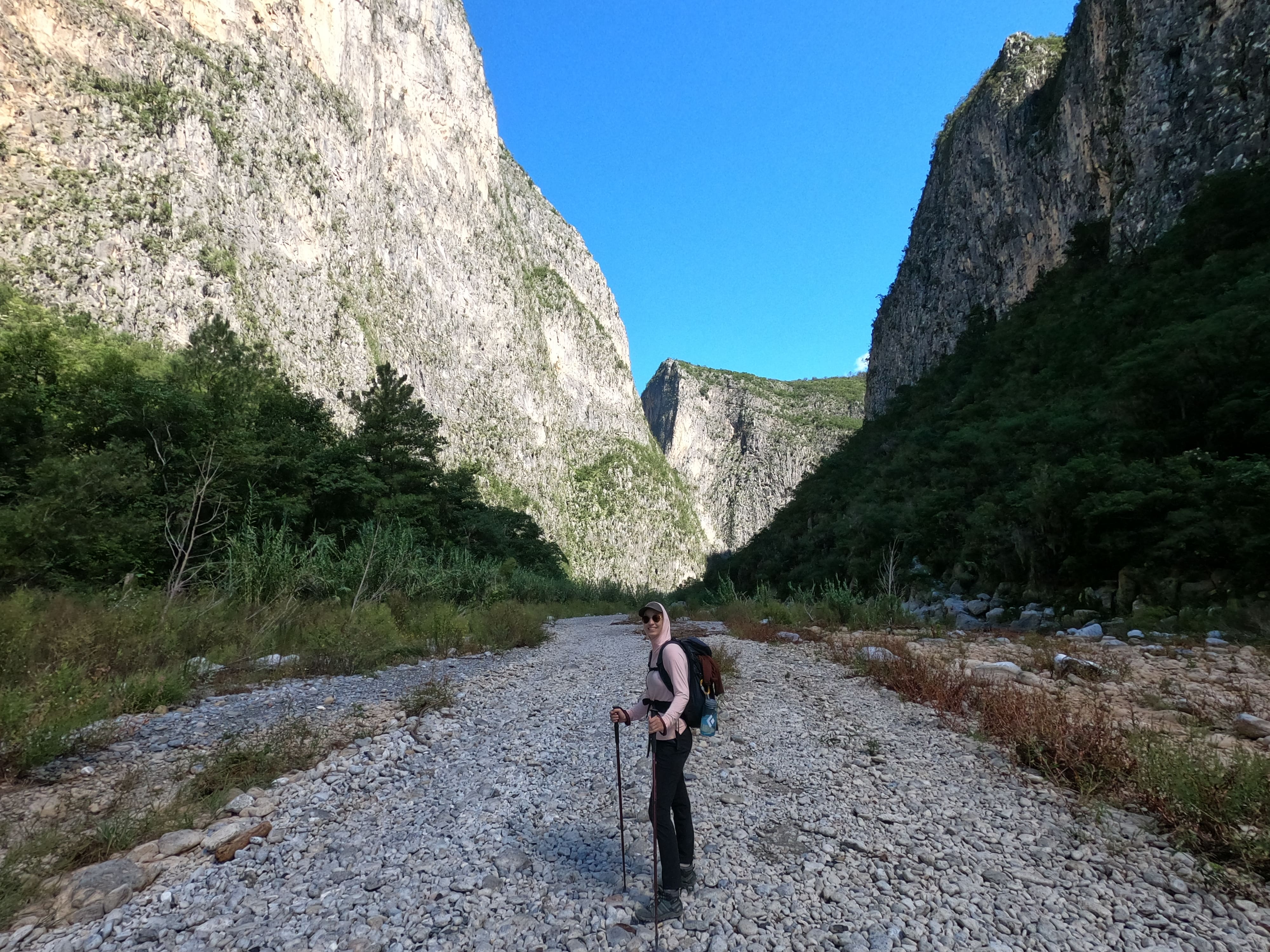
The trek follows the dry riverbed of the Santa Catarina River, always going downstream. It sounds quite easy since you are constantly losing elevation and it is relatively flat, but hours of walking on round river pebbles will take a toll on your feet. That is why resting for a night midway is a good idea, so your feet can recover.
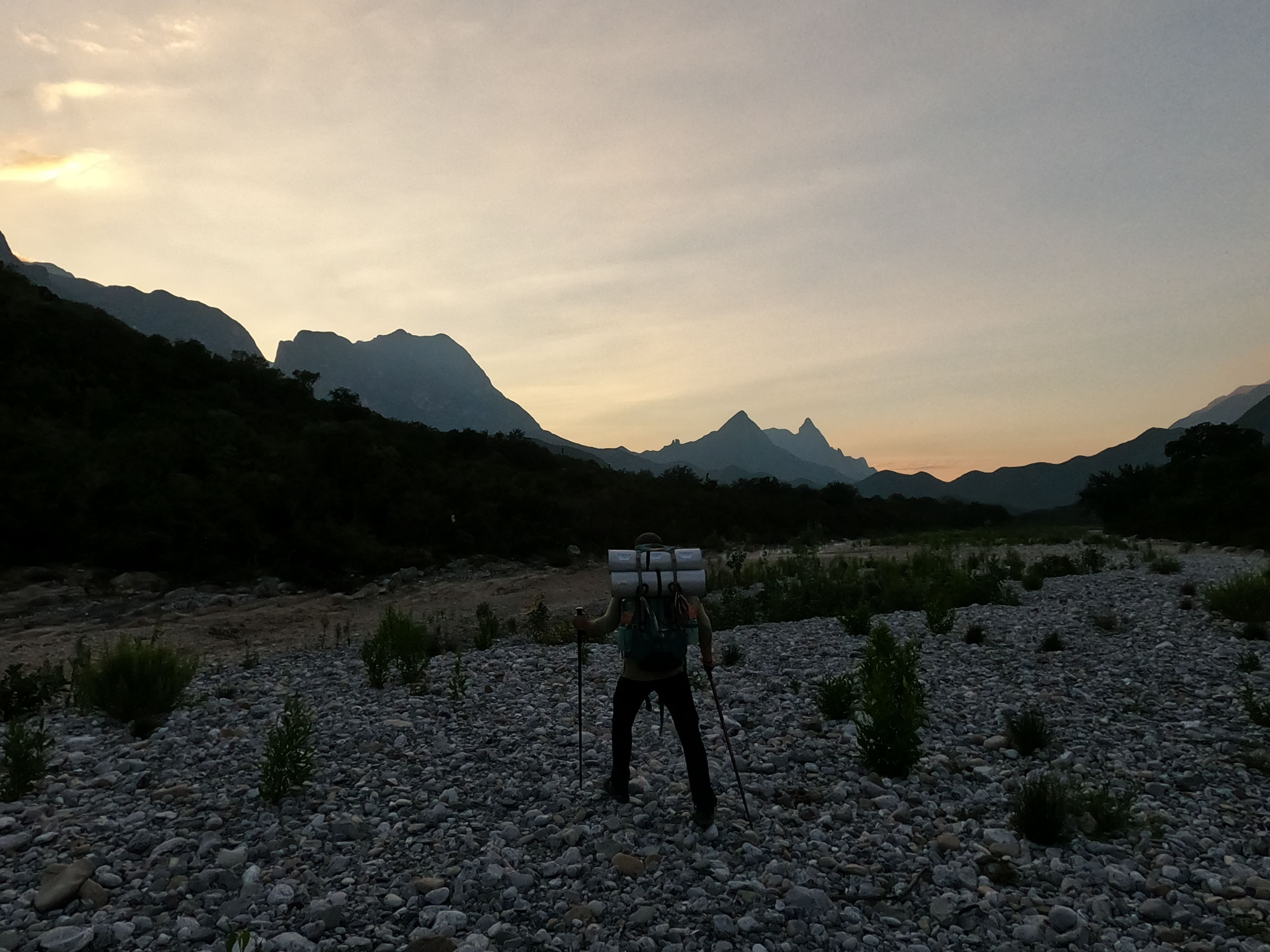
Since the riverbed is ebbing and flowing in S shapes, there are many shortcuts in and around bends, literally allowing you to cut corners. However, when we went, we could see the shortcuts were not frequented, and thorny plants had, for the most part, already reclaimed them, so it was not convenient to pass through most of them, especially with a big backpack like the one we had.
Most of the route is marked with pink ribbons, including the shortcuts, thus allowing you to find the most optimal path through the riverbed. However, the riverbed is huge, and the ribbons are far apart from each other, making it hard sometimes to find your way. That is why we recommend using a navigation service and taking a power bank for your phone, so you won’t get lost even if you lose the ribbons. We relied on Wikiloc for our navigation and trail tracking, and it saved us more than once.
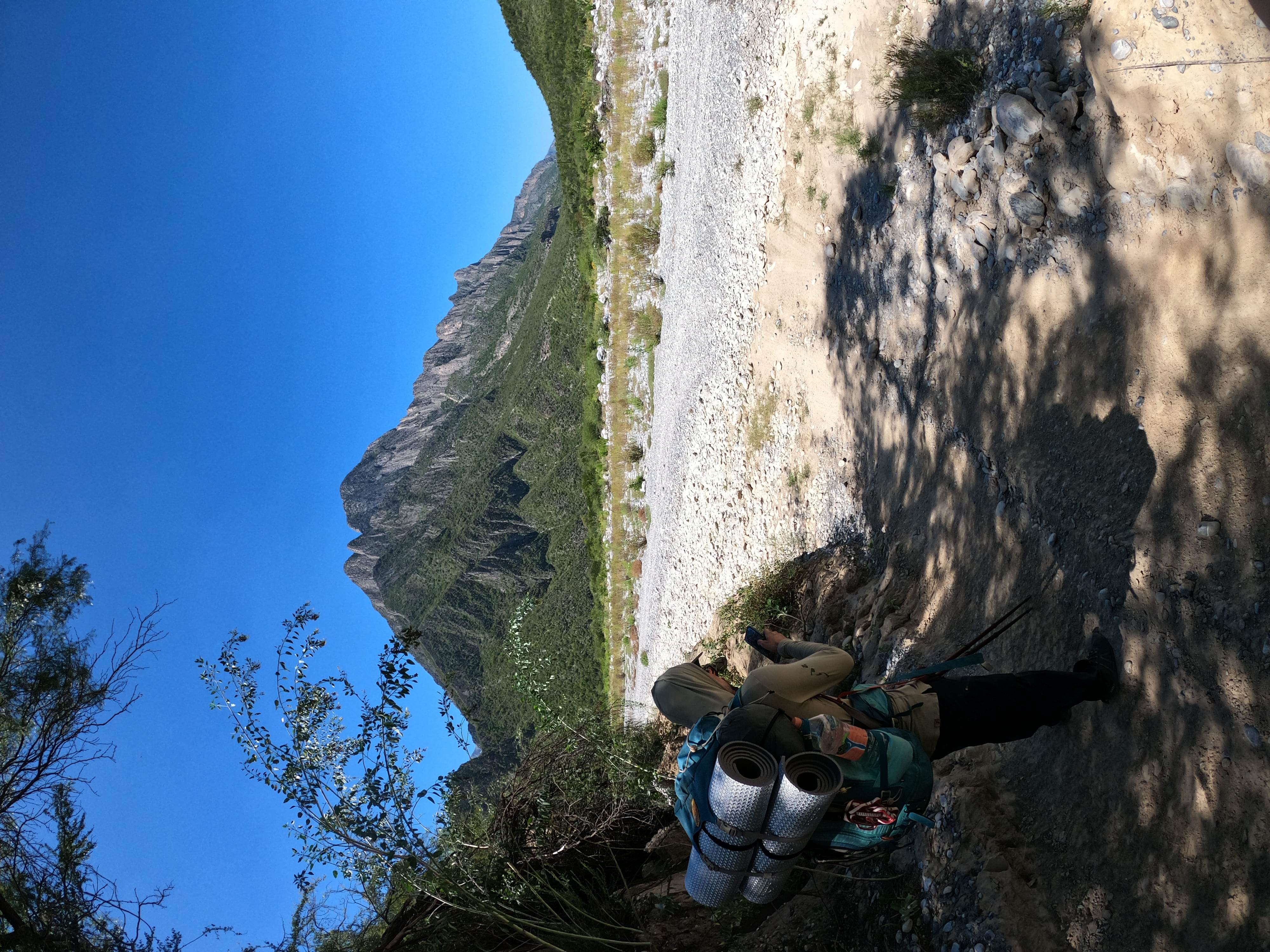
There is a single technical section along the trek. It is situated in a canyon littered with boulders, some the size of a house. The hard part is finding your way through the boulders while making sure you don’t fall into a hole between them. It took us more than 30 minutes to find our way through safely.
This part is as far as off-road vehicles can go when they drive from Rompepicos (the dam at the end of the road in La Huasteca Eco Park) and up the riverbed. In fact, you might start seeing vehicle tracks along the way after it.
Where Does The Trek End?
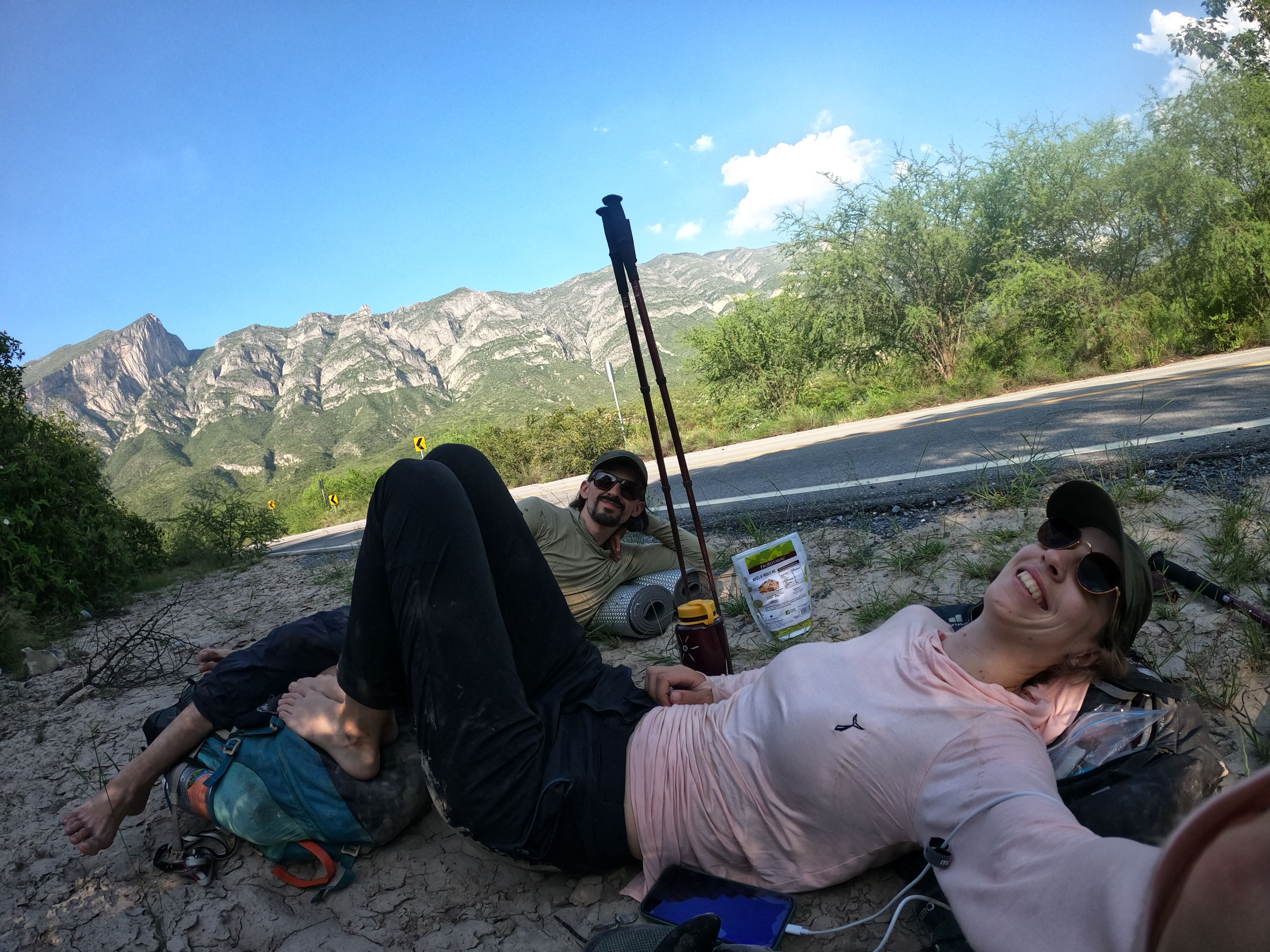
We decided to finish the trek in Rompepicos. Once you get there, you still have 17km to the entrance of La Huasteca Eco Park on a (broken) road. We started walking towards the entrance, and after a few minutes of walking, we managed to get some (weak) cellular signal and decided to call our family so they could pick us up.
You could walk the 17km back to the entrance if you still have the energy and the time. Just make sure you take them into account in your plan. You will see civilization from this point on.
When Is The Best Time To Do This Trek?
You will be in the sun almost all the time, so it is best to do the trek when the weather is not too hot: avoiding summer months is key.
Since you will be walking and sleeping on a riverbed within the canyon, you must ensure the weather is dry when you attempt the trek. Be flexible with your dates and check the weather before heading out. You do not want to camp in the canyon when it is raining heavily.
Most of the time, the river is dry, except after some hurricanes. Ensure the river is walkable when planning this trek.
What Should I Bring For The Trek?
Water
One of the big problems for this trek was water. While trekking under the scorching Mexican sun, you want to ensure you do not run out of water. However, if you are trekking in a remote, mostly dry area, you must bring enough water for yourself, as you won’t be able to refill anywhere along the way.
We carried 12 liters of water and 2 electrolyte-infused bottles. This added significant weight to our packs, but we did not know if we would find water during the trek, so we wanted to play it safe. We had to ration the water to make it last until the end of the trek.
At the beginning of the trek, a small stream appeared and flowed next to us for about 10km. You could filter water from it. However, depending on the season and weather, it might be dry, so consider that.
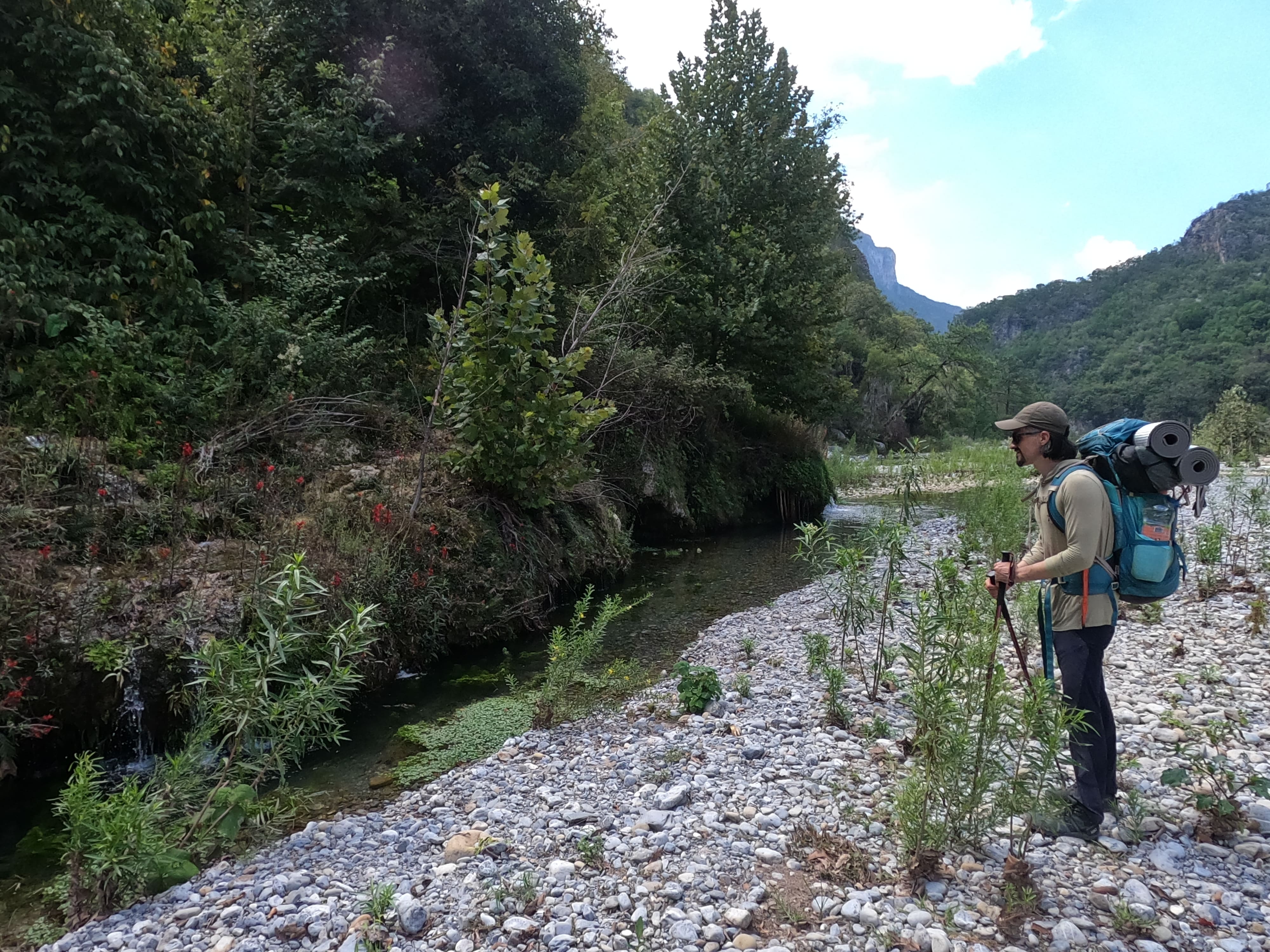
Around km 31, there is a small water facility in Las Tinajas with a leak, creating a small stream of apparently potable water running along a path. You can filter water from it to refill your bottles. However, the leak may have been resolved by the time you visit, so please keep that in mind.
We recommend taking time to properly plan your water strategy, as it could mean the difference between life and death. Purchase a water filtration system and/or water purification tablets, just in case you find water sources and want to refill your bottles. We recommend the LifeStraw.
Food
As you can guess, there are no restaurants or supermarkets anywhere along the trek. Once you start, you are effectively on your own. We brought sandwiches for the first day (for lunch and dinner) and relied on granola bars, nuts, and soy chicharron (not the best idea since the saltiness and dryness made us even thirstier) for the second day.
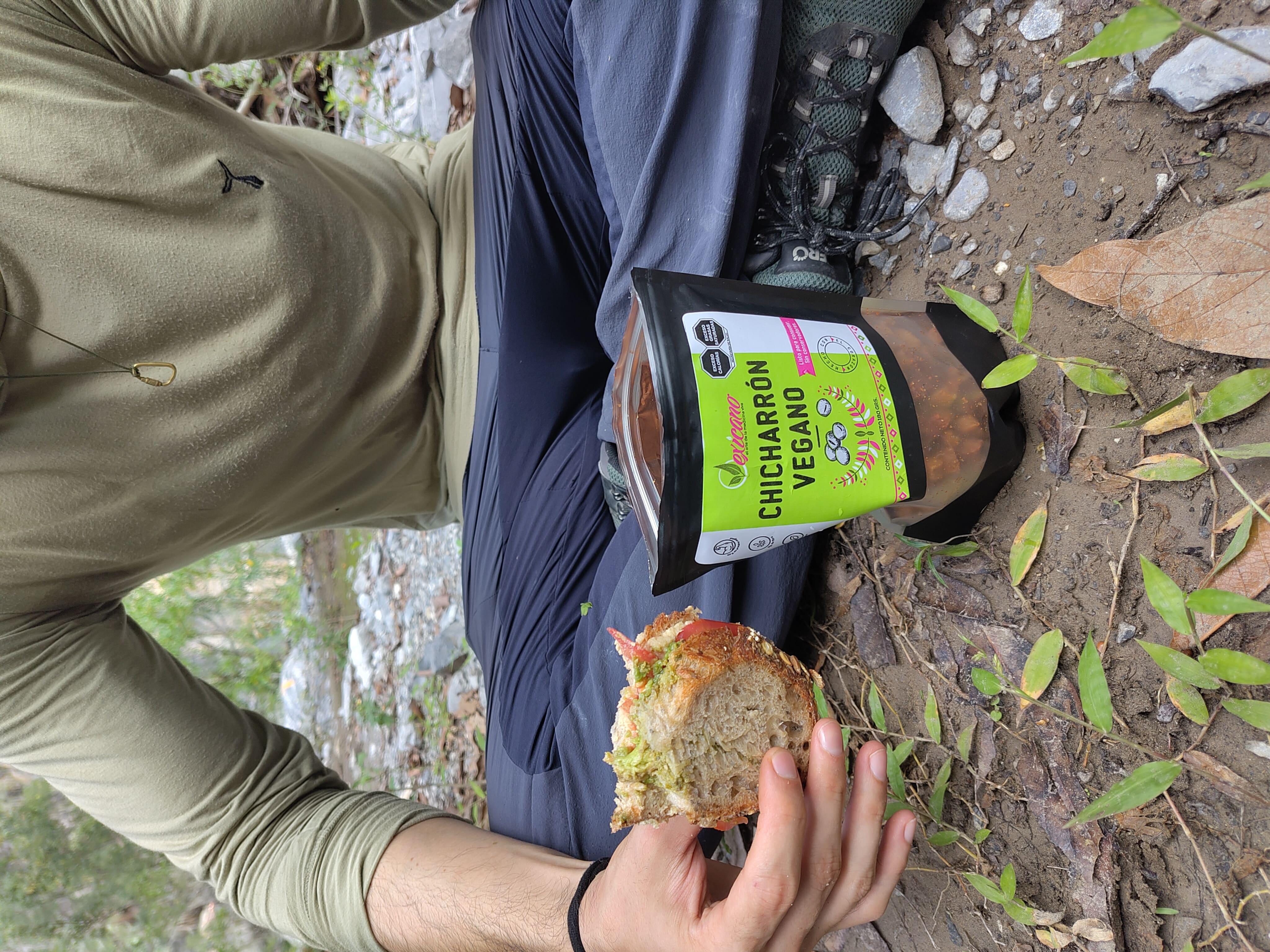
Bring food that is easy to eat, filling, and does not take up too much space. We do not recommend bringing your cooking equipment into the canyon, as it adds weight to an already hard trek.
Fires are prohibited in this area as it is part of the Cumbres de Monterrey National Park. This is a measure to prevent wildfires.
Gear
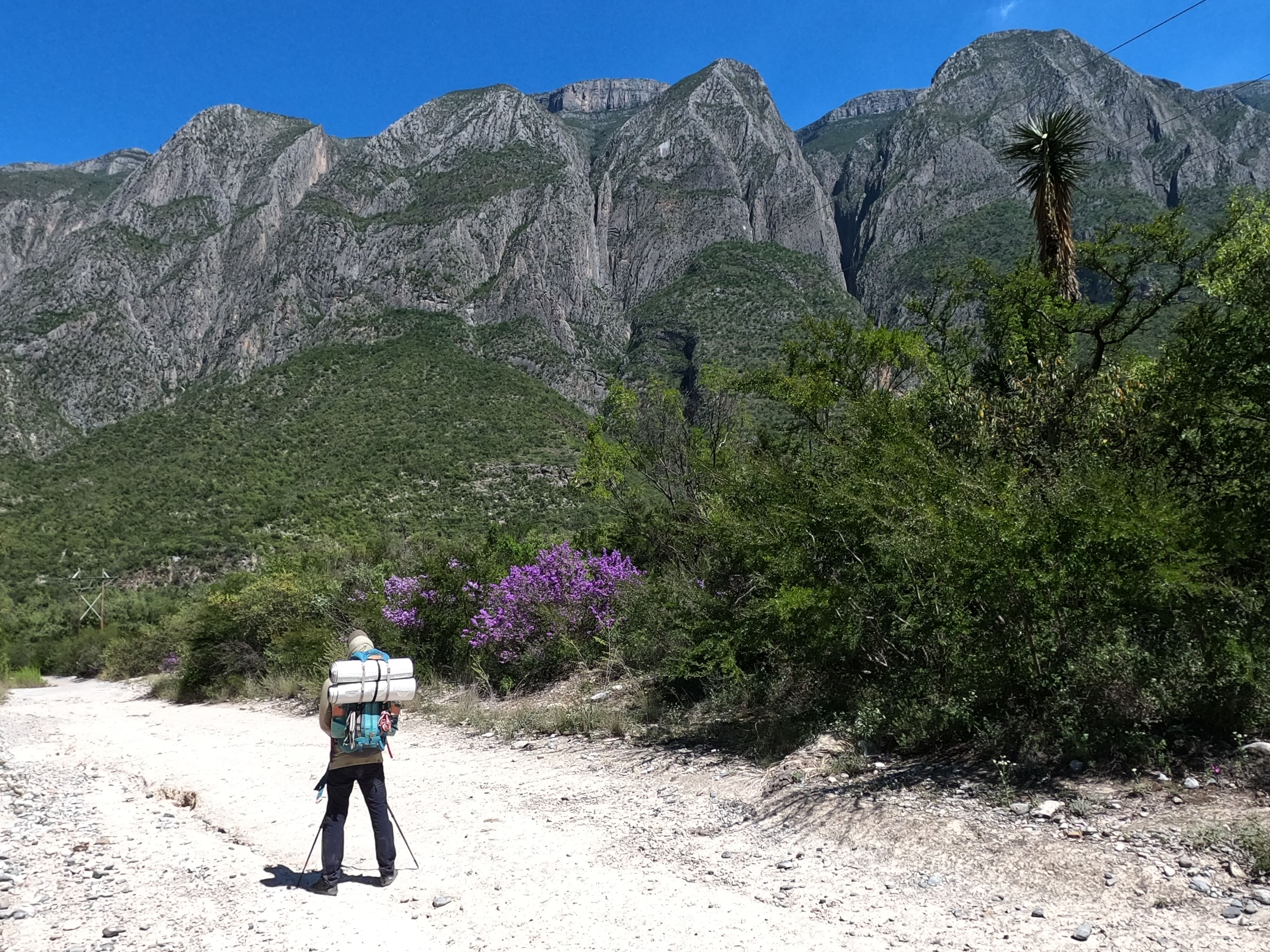
You will be exposed to the sun all day, so covering yourself is necessary. We recommend wearing long trekking pants and a sun hoodie for maximal protection. Apply sunscreen to the remaining exposed parts.
Good trekking shoes are a must. Make sure you are comfortable walking in them, because after 36km, your feet will hate you for it if you are not. Avoid bringing new shoes, as they will likely cause discomfort. In our case, Alex felt discomfort in his boots before reaching the campsite on the first day, and that discomfort only grew on the second day, so make sure you are golden on this.
As we had decided to stay one night in the canyon, we came in with all the necessary gear. We bought the missing gear at Decathlon. Make sure to bring light gear to make your trek easier.
This is a general list of the gear we brought for the trek:
- 1 3-person trekking tent (because a 2-person tent was actually not big enough for us)
- 2 inflatable sleeping mattresses
- 2 mats (for insulation and to avoid pinching our mattresses)
- 2 sleeping bags
- 2 inflatable pillows
- 2 pairs of trekking poles
- 2 headlamps for the night
- 1 power bank for our phones
- 2 light sweaters for the night
- A change of socks (very important to avoid blisters)
- A change of clothes for the night
- Ziploc bags to store our food and trash at night
- Sunscreen
- 1 emergency kit
- 1 storm whistle
This is a list of the things we should have brought but did not:
- LifeStraw
- Satellite phone (in case of emergency)
Emergency Supplies
There is no cellular service for the entire trek. Even in CDG, where you start the trek, there is no service. You only start getting it back slowly after Rompepicos.
We recommend having a satellite phone in case of an emergency. When we were there, we did not see anyone else during the trek except a rancher at the end, and even he might have been a mirage. If anything goes wrong and you cannot communicate, you would essentially be on your own, and that is a bad situation to be in (think broken leg or rattlesnake bite).
Some smartphones include satellite services, like the iPhone. Just make sure the coverage works in Mexico before heading out into the wild.
It is also a good practice to always bring a medikit on your adventures.
What Type Of Wildlife Can I Encounter Along The Trek?
The wildlife in Nuevo León is amazing. It has it all, from big mammals such as bears to big insects such as tarantula-killing wasps.
Bears are actually a common sight near the Sierra, so be careful. You can also find big cats, raccoons, coatis, and other interesting mammals.
There are also dangerous snakes in Las Cumbres National Park. The rattlesnake is common (we actually heard one right next to us in La Huasteca Eco Park). They camouflage pretty well, so you must be careful where you step. As we walked with our trekking poles on top of rocks, we made quite a noise, which we thought would scare them away.
To avoid unwanted visitors at night, we recommend sleeping with no food in the tent. We placed all our food in ziploc bags, then into a single plastic bag, which we hung from a tree roughly 50 meters from camp. Make sure your camp is not downwind from the food, as it will nullify the effect of putting it out.
Conclusion
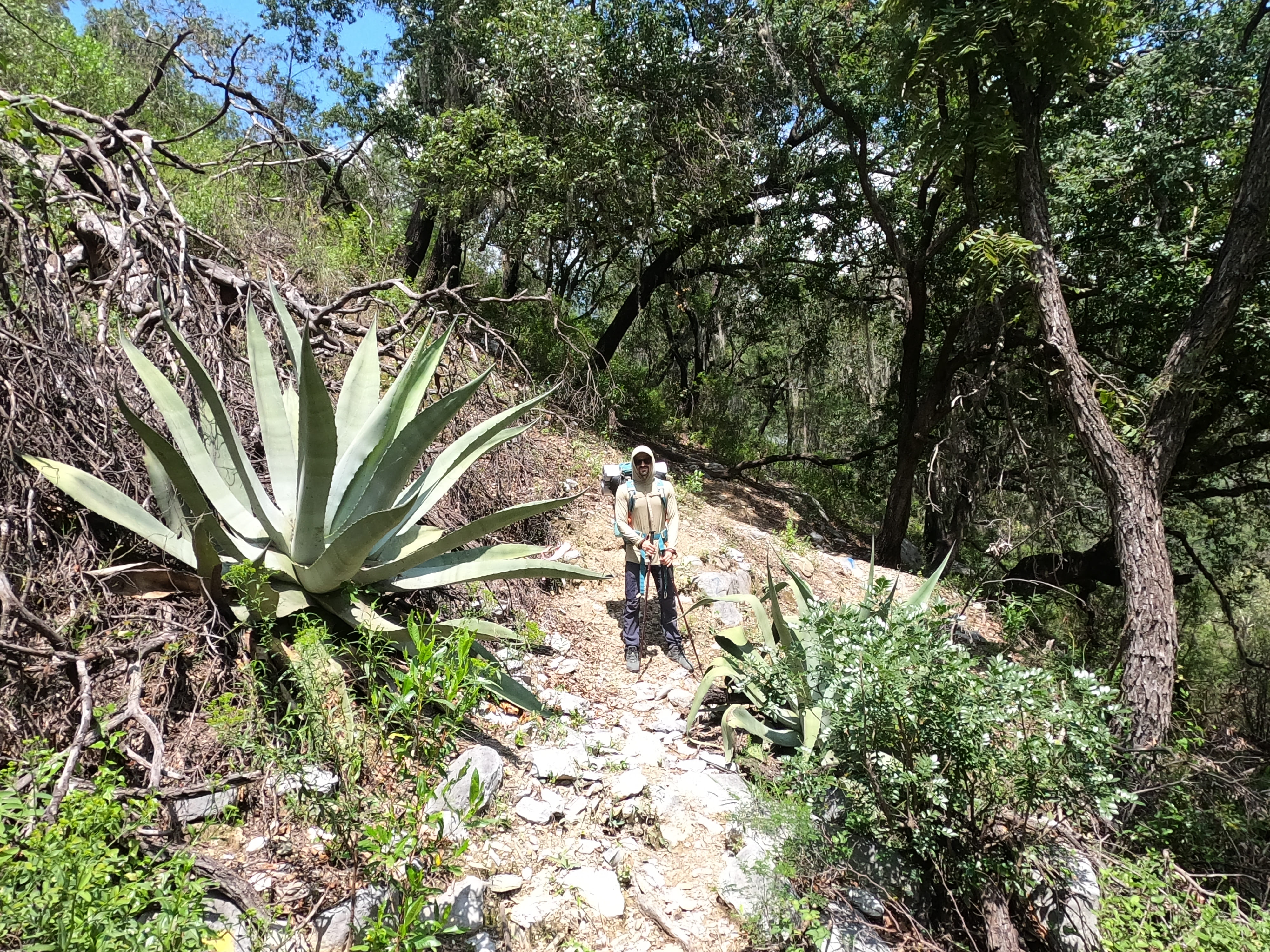
With enough time and preparation, this is one of the best treks Nuevo León has to offer. As a final recommendation, and in an effort to keep this type of place as pristine and natural as possible, if you decide to give it a try, remember to leave no trace behind. Have fun exploring this wilderness!
If you liked this article, give us a follow on Instagram and share it on social media. You can contact us through direct message if you have any questions or need more advice.
More Adventures
A guide to a wonderful weekend getaway in Cuatro Ciénegas, Mexico
In this guide, we cover everything you need to know to plan your trip to this amazing destination in the Chihuahuan Desert.
A guide to sport climbing in Mallorca, Spain
In this guide, we cover everything you need to know to plan your next sport climbing trip to the beautiful island of Mallorca.